

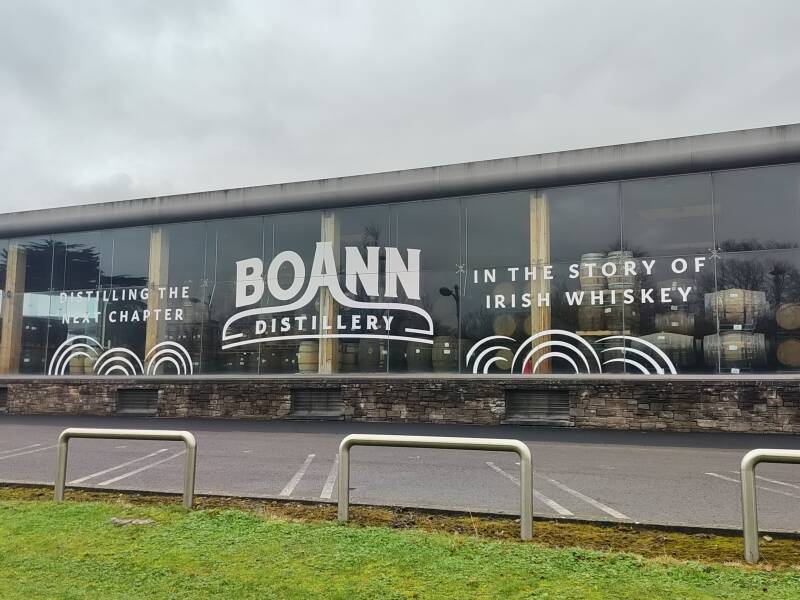
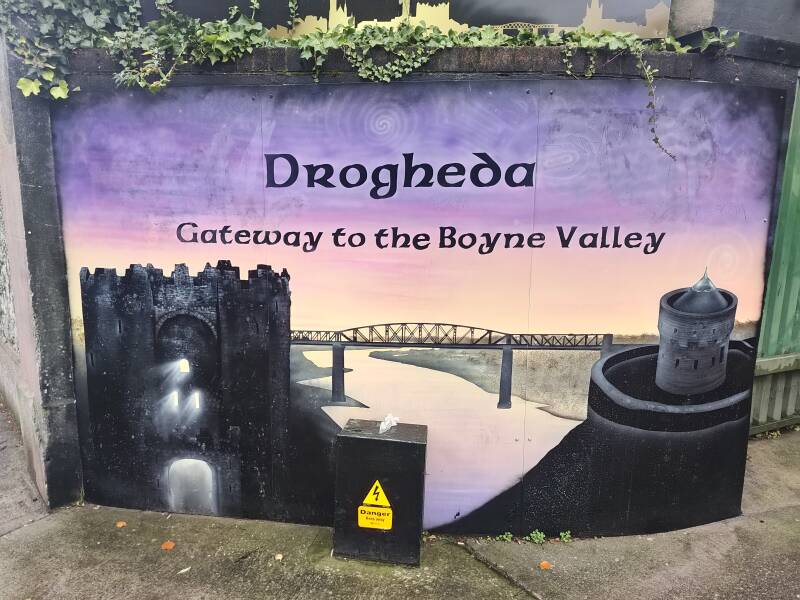
Last winter, I walked out from Drogheda’s train station to see an Irish distillery I’d heard a lot about - Boann. Many had recommended it, and I tried some early products of theirs in Paris, but now I was going to see it for myself. An unusual entry for EuroWhisky - no chance I would become a supplier for such a large Irish distillery. That said, they were very welcoming nonetheless, and I’d like to share how it was to explore this new generation Irish distillery.
‘Boann’, by the way, was the name for the goddess of the Boyne valley. The distillery recently did a solstice bottling, gesturing to the nearby presence of Newgrange. Boann is owned by the Cooney family. Pat (the father) has fifty years of wine and import experience, Peter handles export sales, and other family members James and Sally Anne are also working at the distillery. They started operating in 2019, and at the time of my visit (late 2025) had just released the first drops of their own liquid. The site used to be a car dealership, and then a brewery!
A lot of construction was going on when I visited, with the area around the entrance being turned into a bar and shop. The site seems quiet, but Alex assures me they run two shifts a day Monday to Friday and one per day on the weekends: production is continuous here. Speaking of Alex, he’s been here pretty much from the start, and he shows me around. Turns out Alex and I have some mutual connections, as he studied distilling at Heriot Watt! In fact, his specific experience there included researching how to produce whiskies with a high % of oats in the mashbill.
If you love technical details about your favorite whiskey distillery, get ready - I’ve got plenty of them here!
DISTILLATION
The mill is running when I arrive, filling the large open space of the distillery with noise. This model is built to cope with many different types of grain - something very important when your main style is single pot still (SPS). It needs at least 30% unmalted barley, some malt, and other grains too - but more on that below.
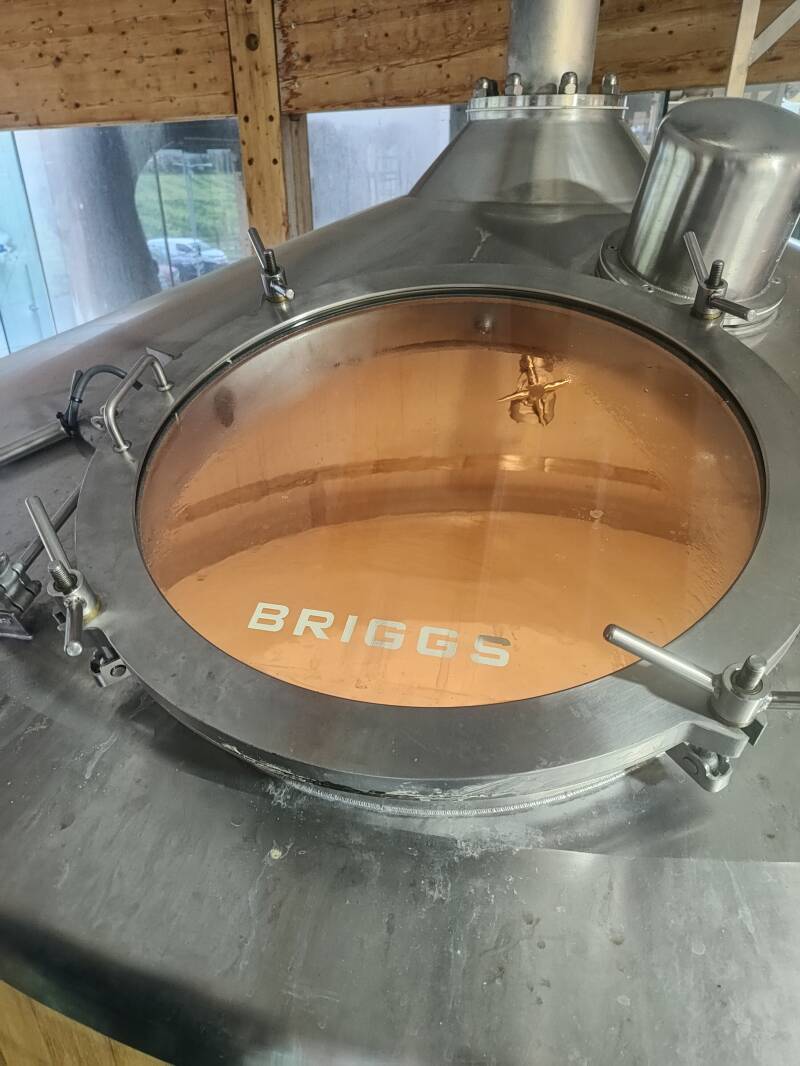
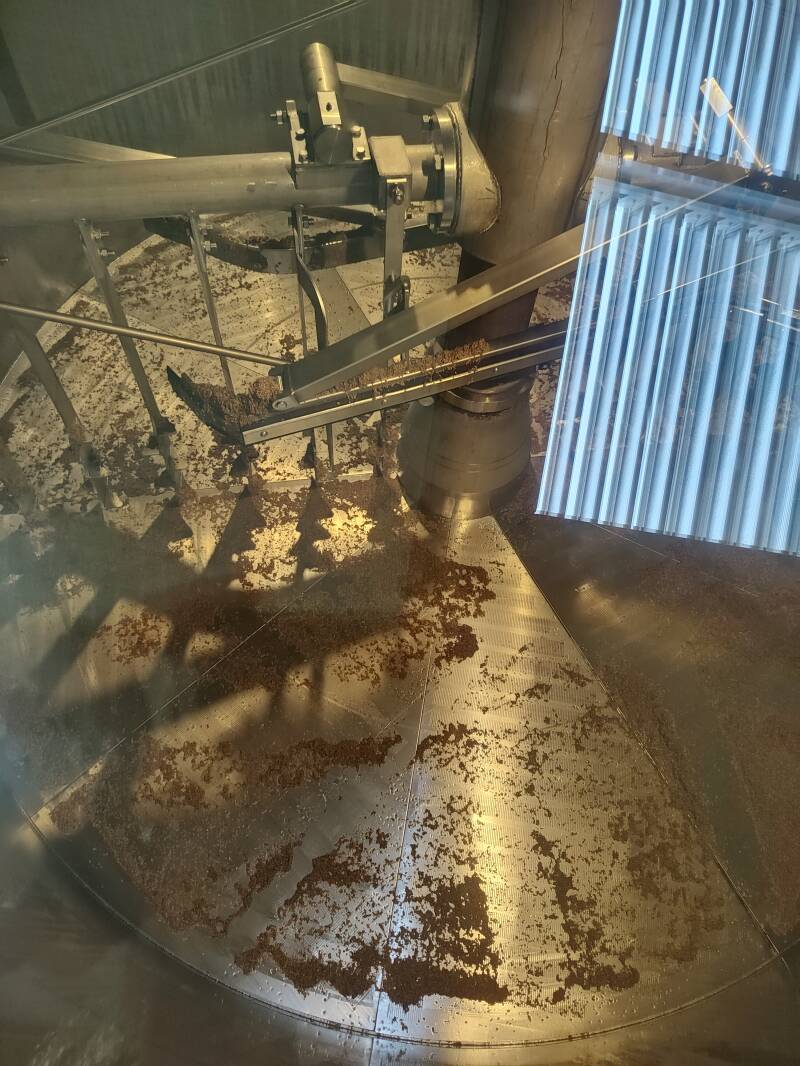
All mashing at Boann is shepherded by an automatic electronic system. Oats are going in during my visit, subjected to a first water at 40°C ‘to maximise beta gluconase’. While (unmalted) oats are usually a small percentage of Boann’s mashbills, they can go as high as 30%, and beta glucans can cause everything to become a gummy vat of unworkable porridge (hence beta gluconase to break them down). Three more waters come in at 65, 68, and 72°C respectively. As usual, the idea is to wring more and more sugar from the grain with each water, pushing it hotter each time to keep the extraction going.
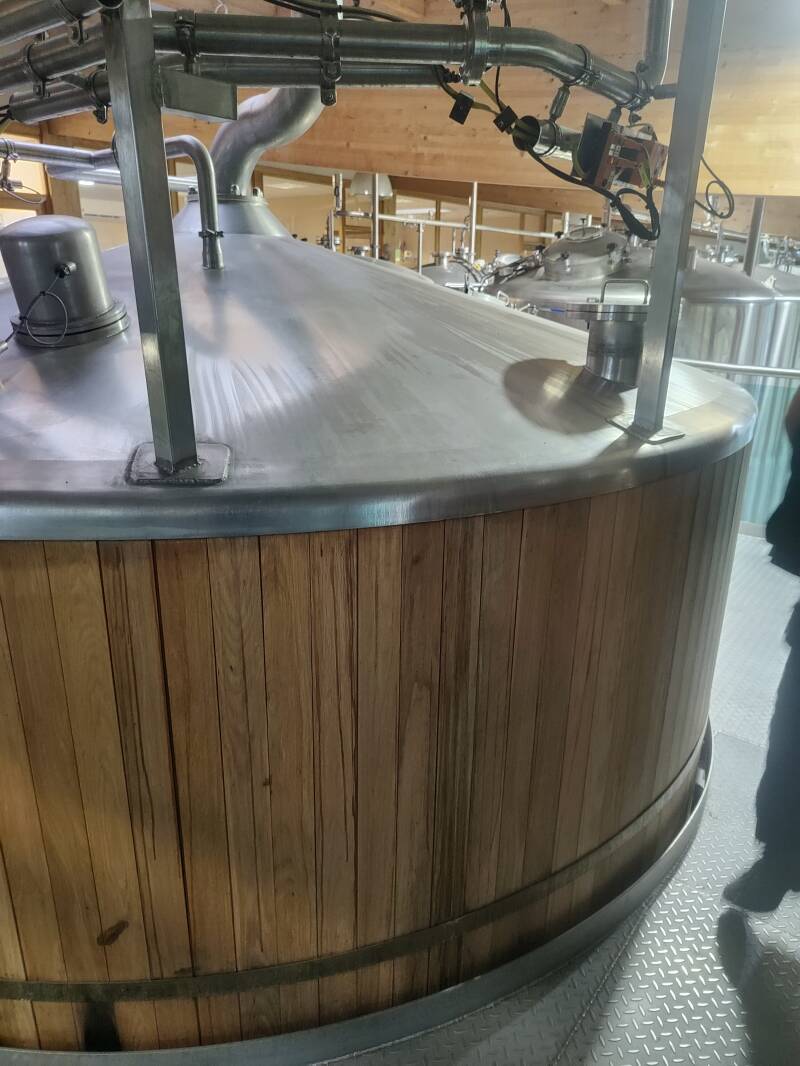
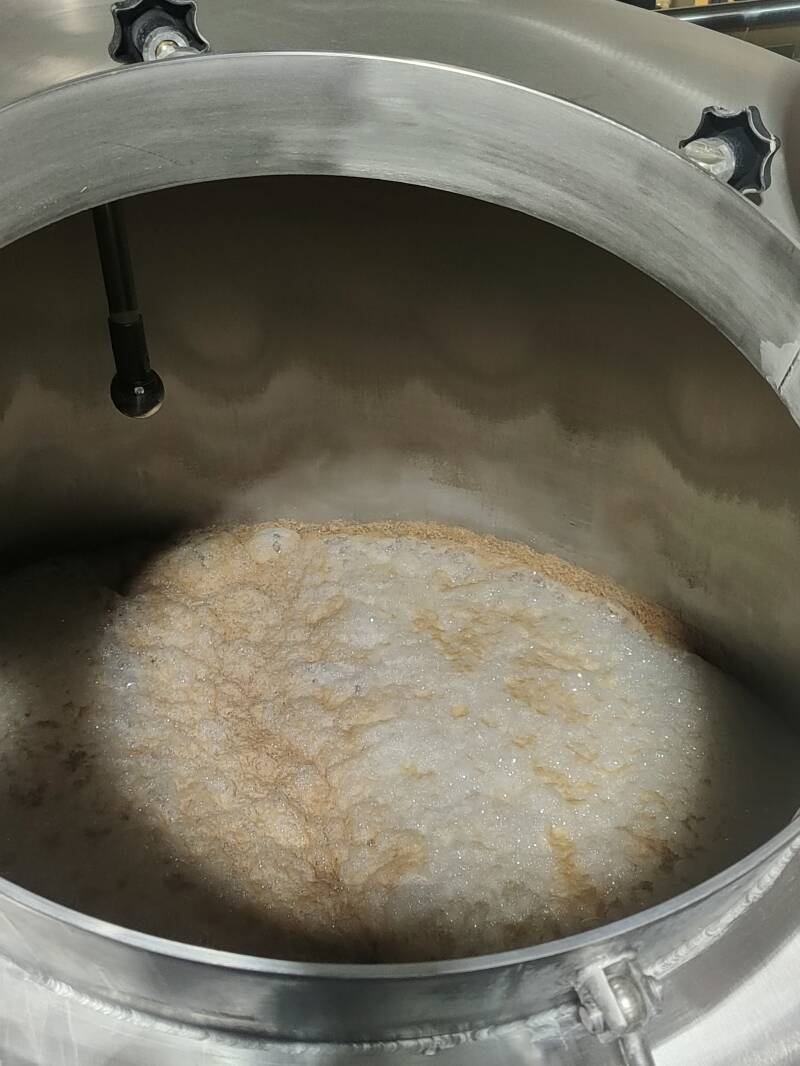
From 2,500kg of grist, Boann ends up with 10,000L of wort. They then pitch 10kg of MG+ yeast from Wicklow Hops, beginning a fermentation which runs without any temperature control. Apparently they hit a consistent 22-24°C quickly, the yeast warming itself up to a self-destructive 38°C. While some ferments go a bit shorter/longer, the average is short at Boann, around the 72 hour mark.
The wash still can take a whole batch of wash in one go (I suppose that’s what the name always implies…), leading to low wines of approx. 3,500L at 22% ABV. You do two of these wash runs, then combine those low wines for the second distillation. The resulting intermediate spirit steps up to 55% ABV, with a third of the total result discarded after collection between 18 and 72% ABV. All this lets Boann do a very precise cut on their third run of 76.5-82%, with the third still (a comparatively small 2200L model) releasing the final new make at a clean 80% ABV.
DETAILS
- 4 grain silos (50/50 un/malted)
- Briggs mash tun (stainless steel)
- Core mashbill: 40% malted barley, 55% unmalted, 3% oat, 2% rye
- Steel washbacks
- Stills: Green Engineering (Siena)
- 100% triple distilled
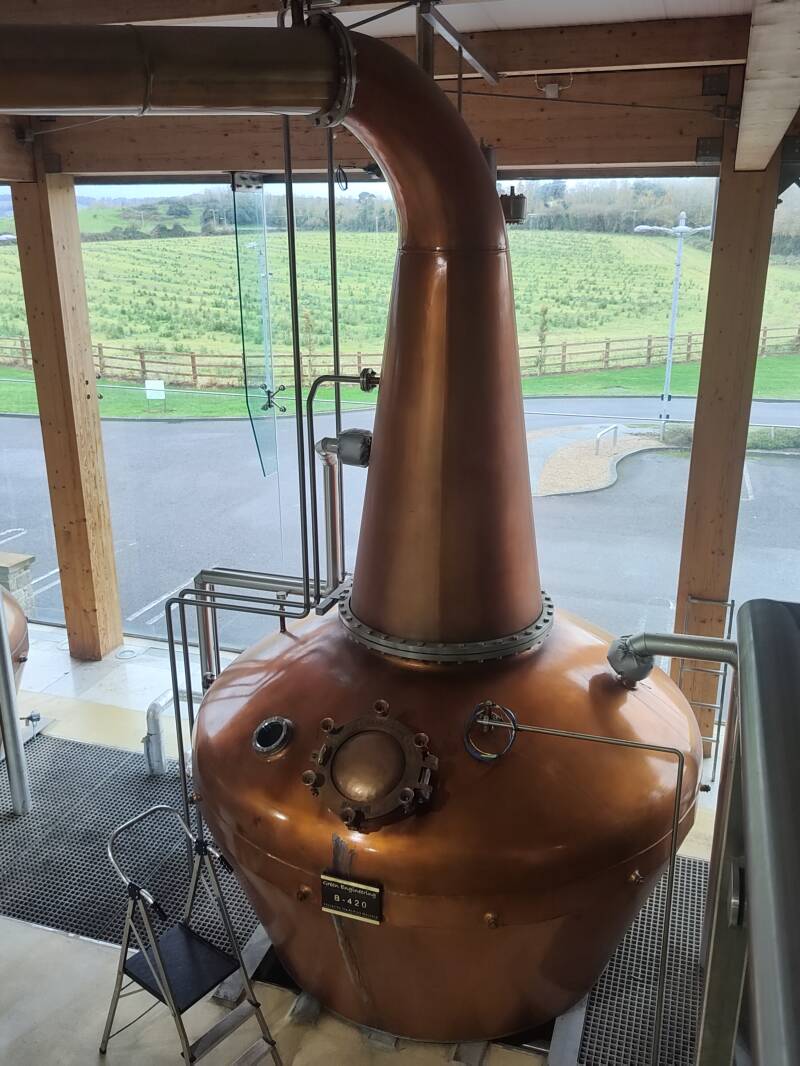
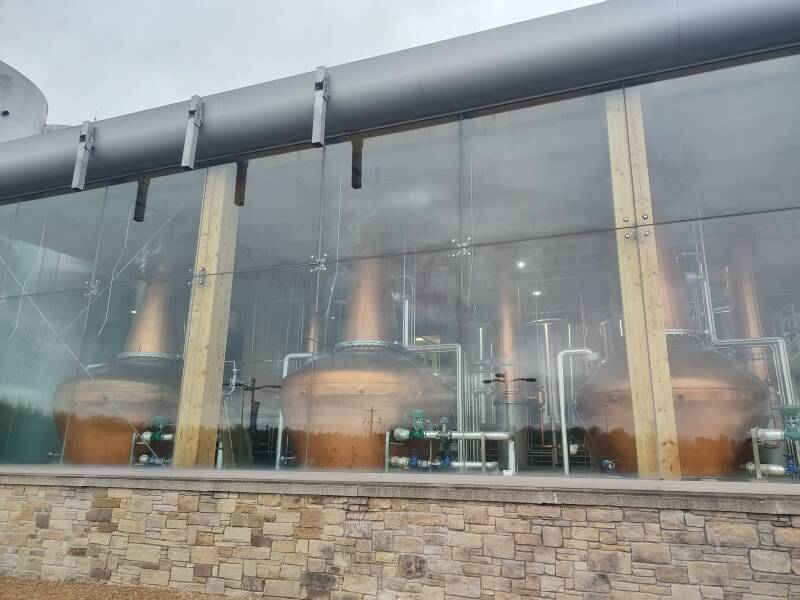
The stills themselves are pretty wide and open in shape. Their necks and lyne arms are lined with a copper paint designed specifically to give a rough surface (on a nano scale). This increases the surface area of these parts by a factor of six! Alex explains that this allows Boann to get more copper contact (and corresponding ‘orchard fruit’ notes) without having to run the stills slowly or underfill them. They can also increase reflux by piping supercooled glycol through cooling coils in the still necks. Sometimes, Alex runs a ‘light and heavy’ batch, activating the cooling coil in the early heart of the run before turning the coil off and collecting this second part separately.
All these tricks give the blenders of Boann far more flexibility in terms of their spirit’s ‘weight’. I can absolutely see the utility of that, only I hope it doesn’t lead to confusion (or perhaps the better word is ‘aimlessness’) in the development of the distillery’s emergent style.
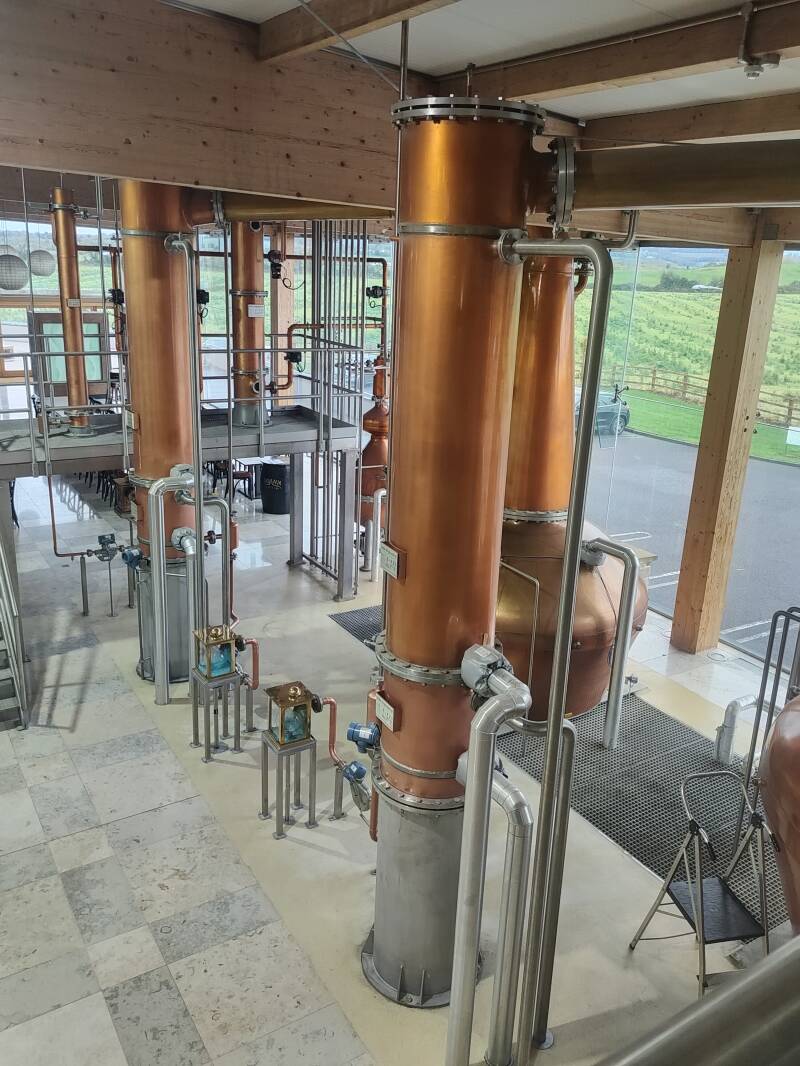
Even the condensers play a final trick on me - they seem like regular shell-and-tubes, only the layout is reversed, with spirit flowing around the tubes rather than through them! This is done to further increase copper contact. Each condenser holds 253 copper tubes, with extra cooling glycol at the base intended to lock in more volatile compounds.
I already said this is a big operation, yet Boann has plans to go further. More shifts with a proposed expansion would bump the total annual capacity to 900,000 LPA (akin to Scapa or Glenglassaugh). This could, Alex tells me, include getting a second wash still and additional washbacks… which would then double that level again to 1.8m LPA (like Glendronach or Balblair).
There are certainly plans well under way to convert some of the offices at Boann to a visitor experience area, supplementing the existing shop. Having been at the distillery nearly since its inception, Alex has already seen plenty of changes on the site. Brewing used to take place where the casks now sit, for example, and there are new cask warehouse spaces coming into use. The warmer of these will be used for finishes…
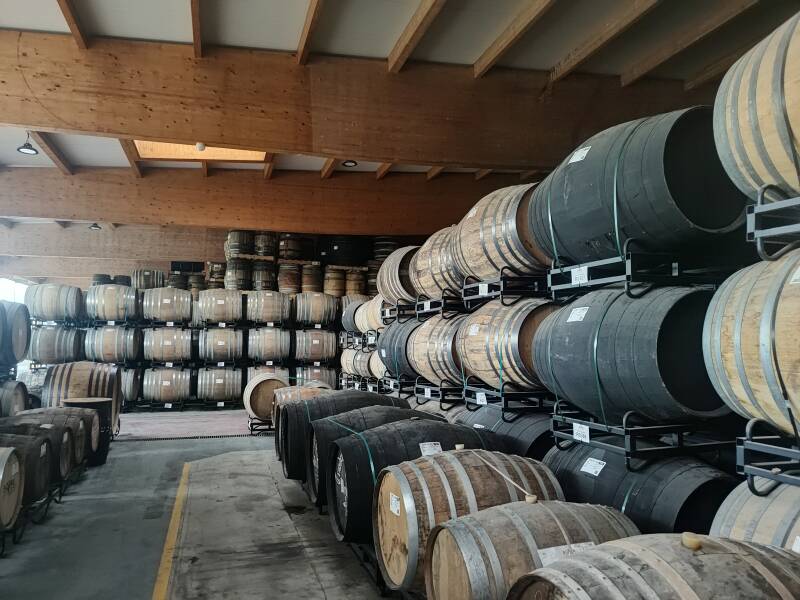
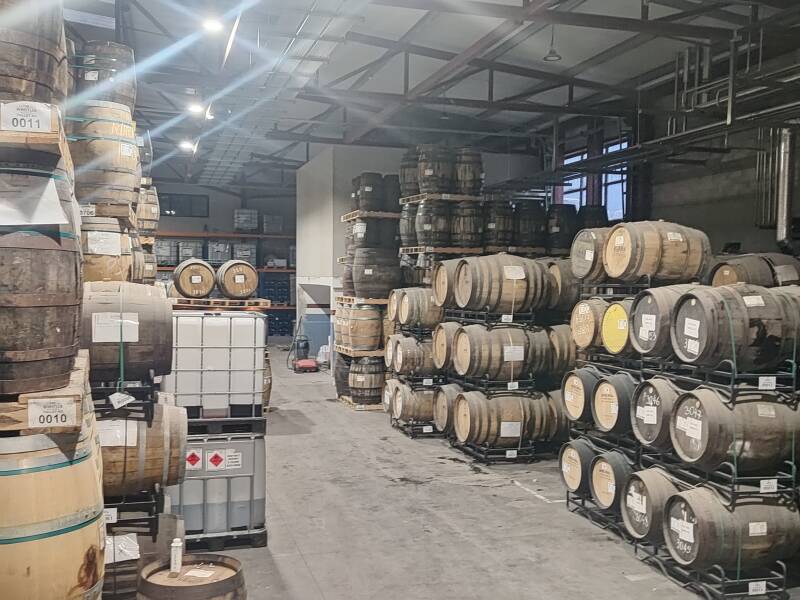
They have four external warehouses (with space for a fifth), each one holding well over 6,000 casks. I spy some casks labelled ‘NEOC Medium Toast’. NEOC stands for New Era Of Cask, simply describing an STR with a specific trademark (produced by ASC in France).
The distillery initially filled their spirit into nine different cask types, a mix including PX, Chardonnay, and Sauternes. Right now, the focus has apparently shifted to sherry, Marsala, Madeira, and Rivesaltes. Each cask is labelled with a mashbill, and Alex aims to match each recipe to a suitable cask. As he says this, I can see an example where a sample with more rye has ended up in a Marsala cask. Alex wanted to fill this cask with a spirit that could match the candied orange peel notes of Marsala, adding malt but making ‘more of a spice bomb than a sherry bomb’.
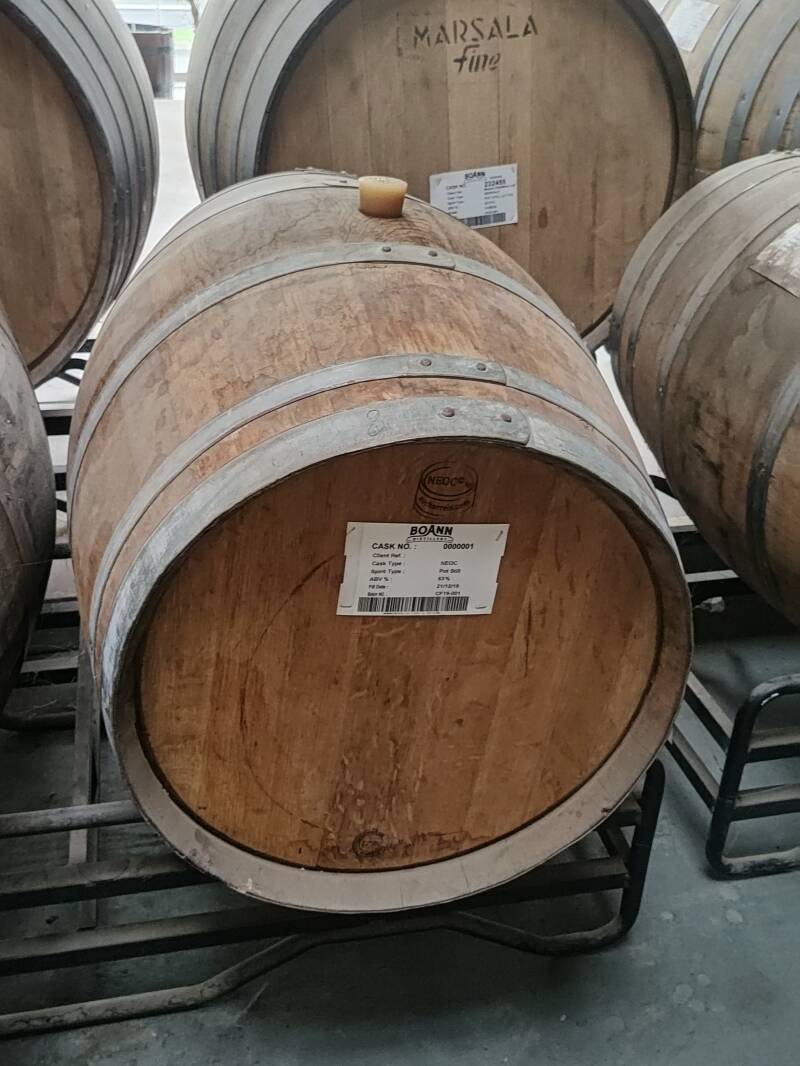
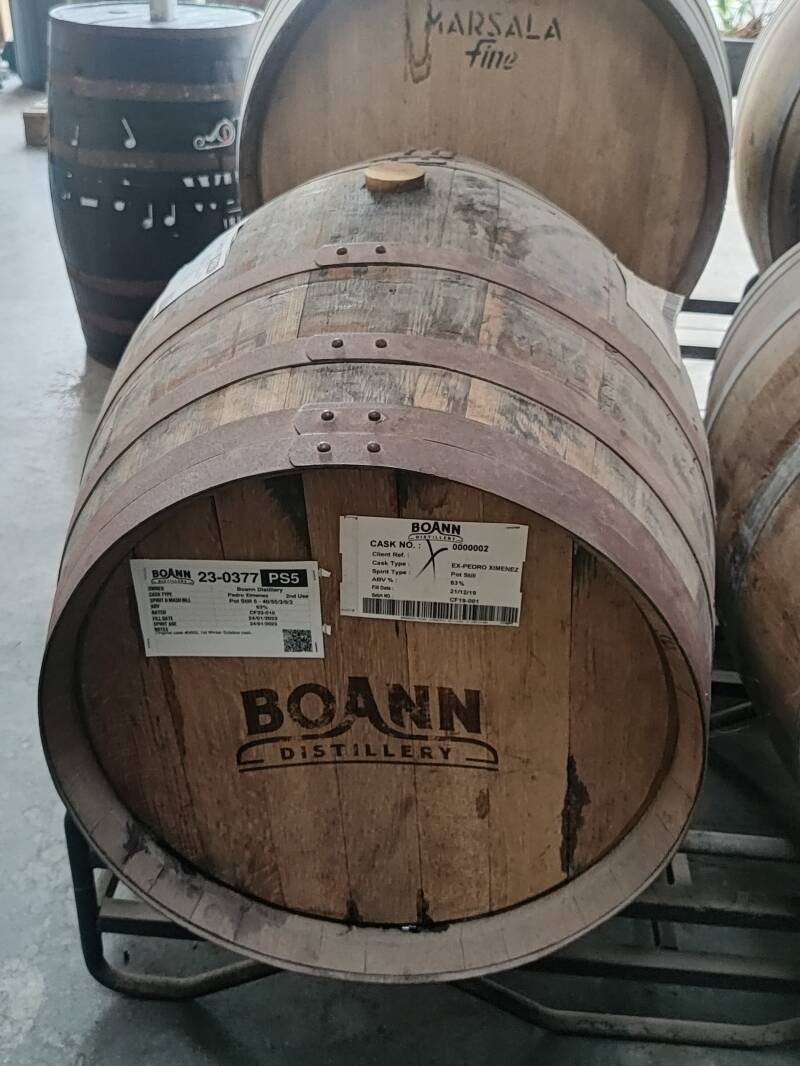
The goal is to produce three standard Boann expressions of Single Pot Still: Marsala, Madeira, PX. Though Boann filled everything with a 50/50 balance of malts to start off with, they also want to shift to new mixed mashbills for the long term. A lot of this draws on work Boann did with Fionnán O’Connor, who found old memos and mashbills in Irish archives back in 2020.
You see, Irish Single Pot Still (SPS) is not as long-established or fixed a style as you might expect. It existed without formal/legal definition in the nineteenth century heyday of Irish whiskey, and then came the mid-twentieth century. With only Bushmills and Midleton still operating on the island, Midleton’s own SPS mashbill became the default. In 2014, the Irish government decided to establish a proper legal definition, and essentially copy-pasted the Midleton recipe. Boann have drawn on other, older mashbills to try and broaden the scope of what SPS can do, including one from former Drogheda distillery Preston’s.
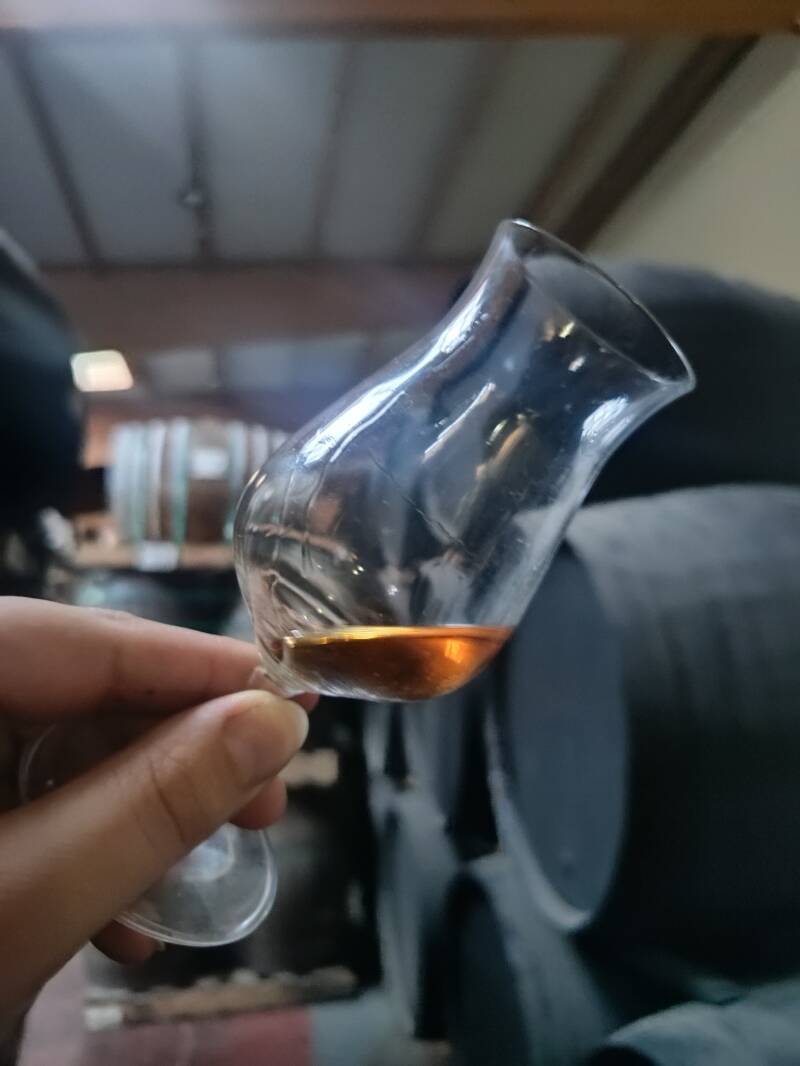
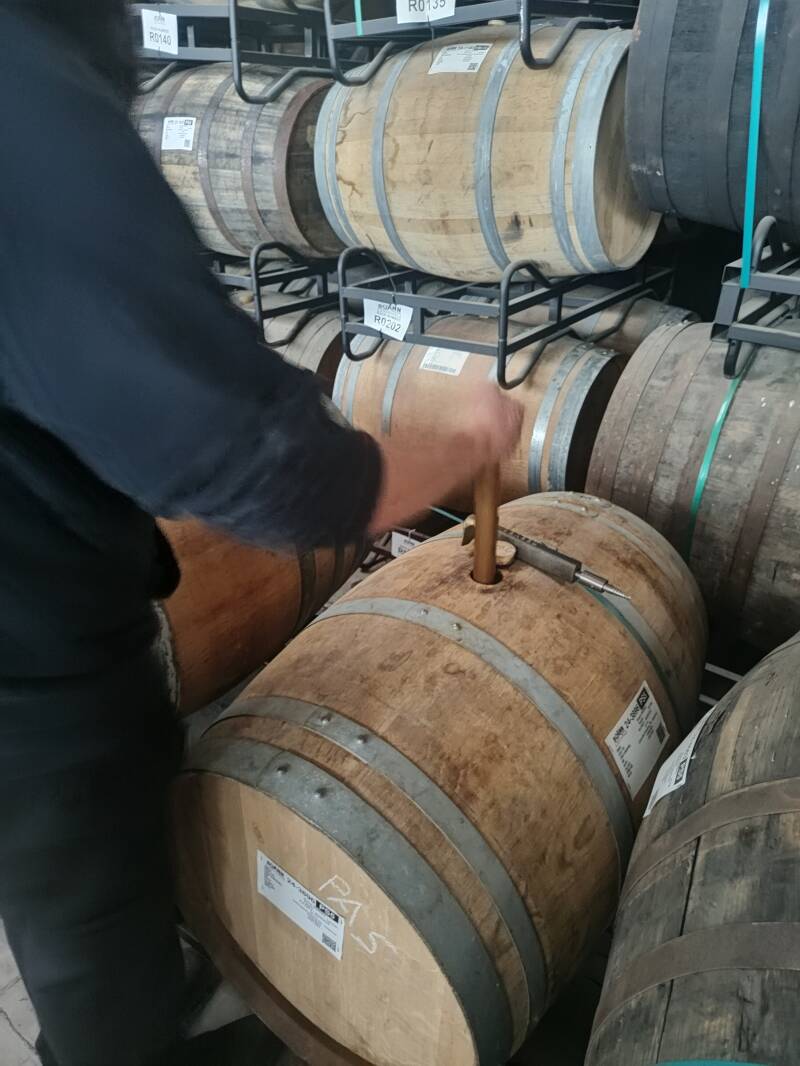
A few extremely old amontillado and oloroso casks can be found in the Boann warehouse. With more than 100 years of use for wine storage, these casks supposedly give you the best flavours due to being softer/rounder, with fewer tannins. Alex points out a Fondillón cask (a rancio style aged red wine from Alicante) alongside some Italian passito. I’m lucky enough to sample that one, which Alex tells me is 57% ABV. Warm, rich, baked custard: beautiful.
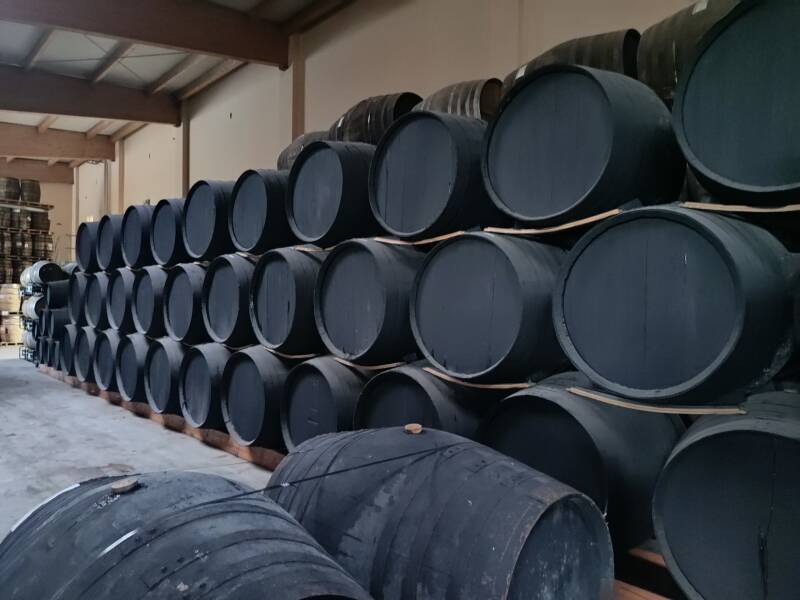

A big row of ex-solera casks lines one wall. All are made of chestnut, though Alex tells me cherry and mulberry wood casks can also be found at Boann. These solera casks here are full of re-racked SPS (after three years in ex-bourbon). Palo cortado catches my eye, as always.
Apparently, the angels' share here is actually a bit higher than expected. While the distillery hasn’t been open long enough for Alex to give me a very clear figure, it's still interesting to see. It might be the drier air of the east coast - one cask did apparently go up in ABV, so there could be something there. Some casks are full of experimental spirit batches, used for agricultural research with samples being taken every month to analyse changing flavour compounds.

TASTING
Besides the cask samples I was very fortunate to taste with Alex, we had to take a look at the bottlings. As mentioned, I had tried a few things out of Boann, but not many. Even when I visited, their bottlings were quite young.
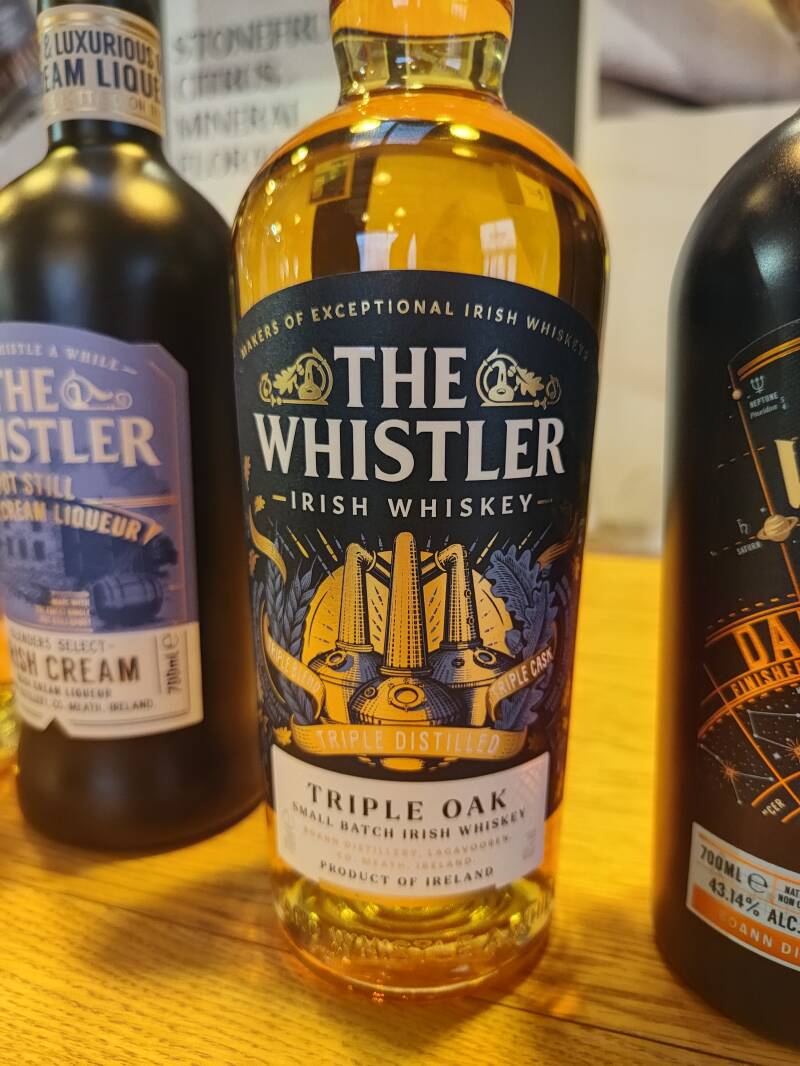
Boann’s Triple Oak is intended to compete with Jamesons. It’s a blend made using 50% grain whiskey (bought in), 30% SPS, and 20% malt. The Whistler bottlings are all single malts. The Triple Oak is super light, as expected, and I can see it competing with Jamesons very well.
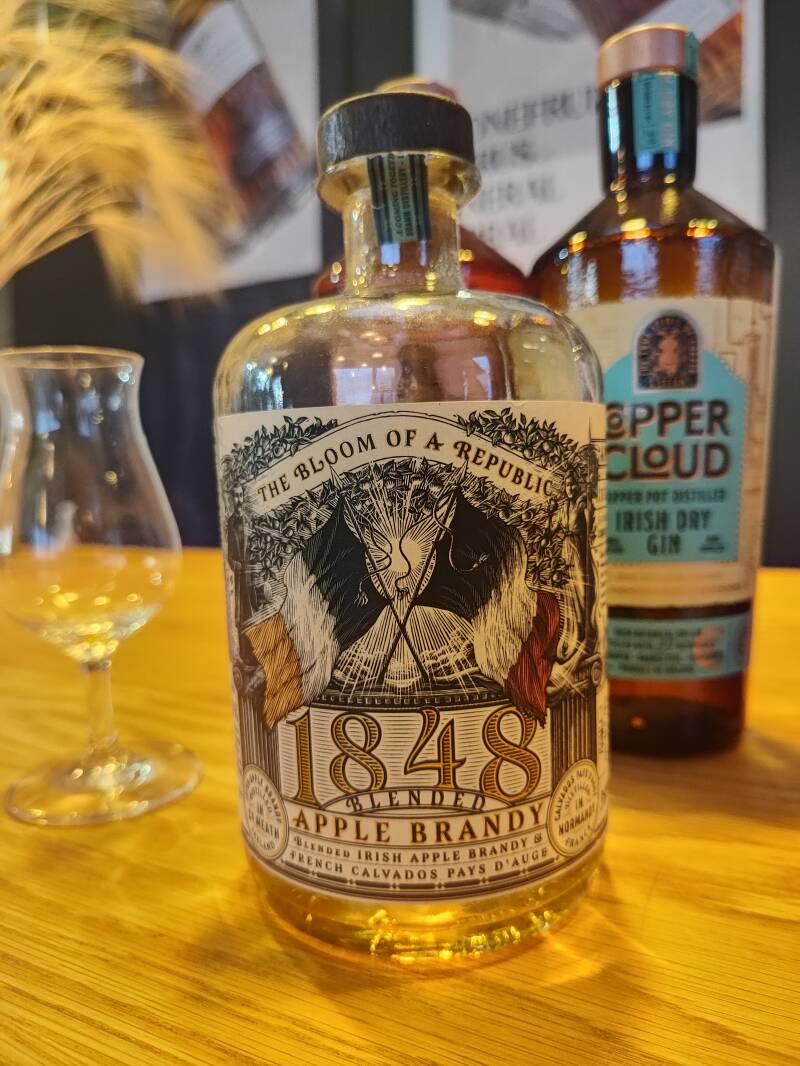
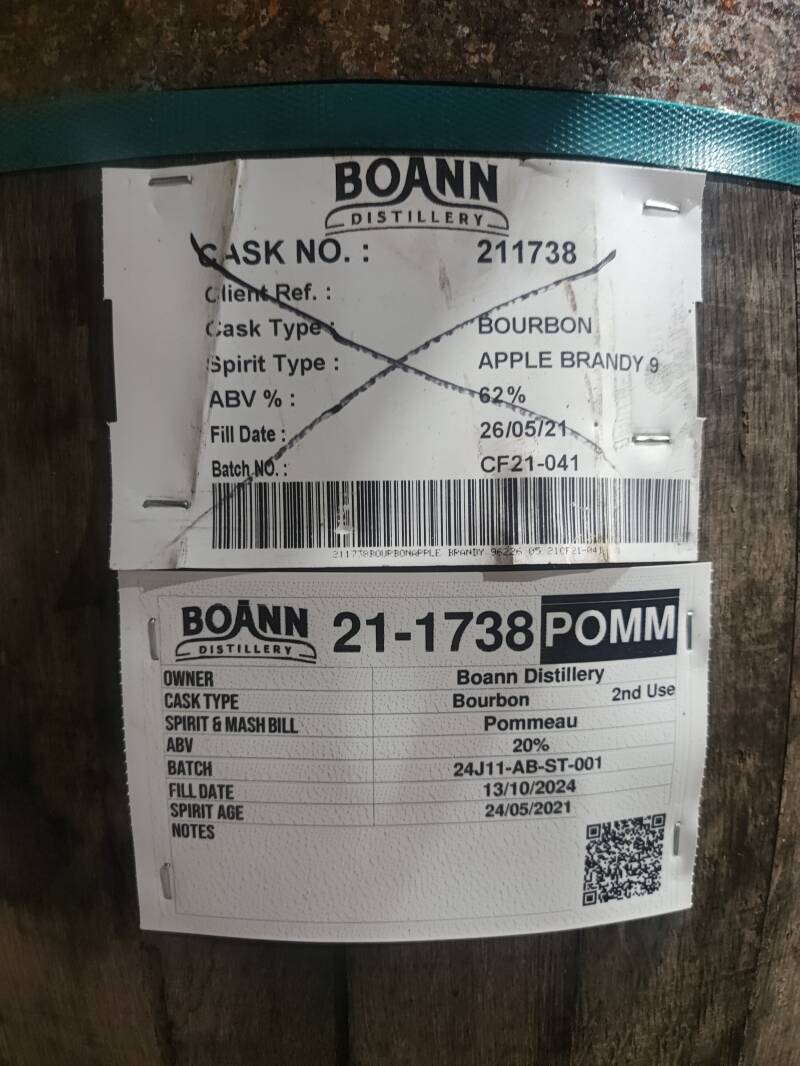
The Cooney family also owns a 30 acre apple orchard, but they sold their beer and cider brands to the makers of O’Haras. What they do still get out of this, however, is pommeau and apple brandy casks! You may have noticed a photo of one pommeau cask above.
The Cooneys’ apples are pressed and fermented down in Tipperary, with the resulting wash being sent up to Boann for triple distillation. Family honey bees further supplement the Boann range, providing the material for Boann’s honey liqueur. Finally, the Cooneys also own a cream liqueur facility (also in Tipperary), used to produce the Whistler liqueur below.
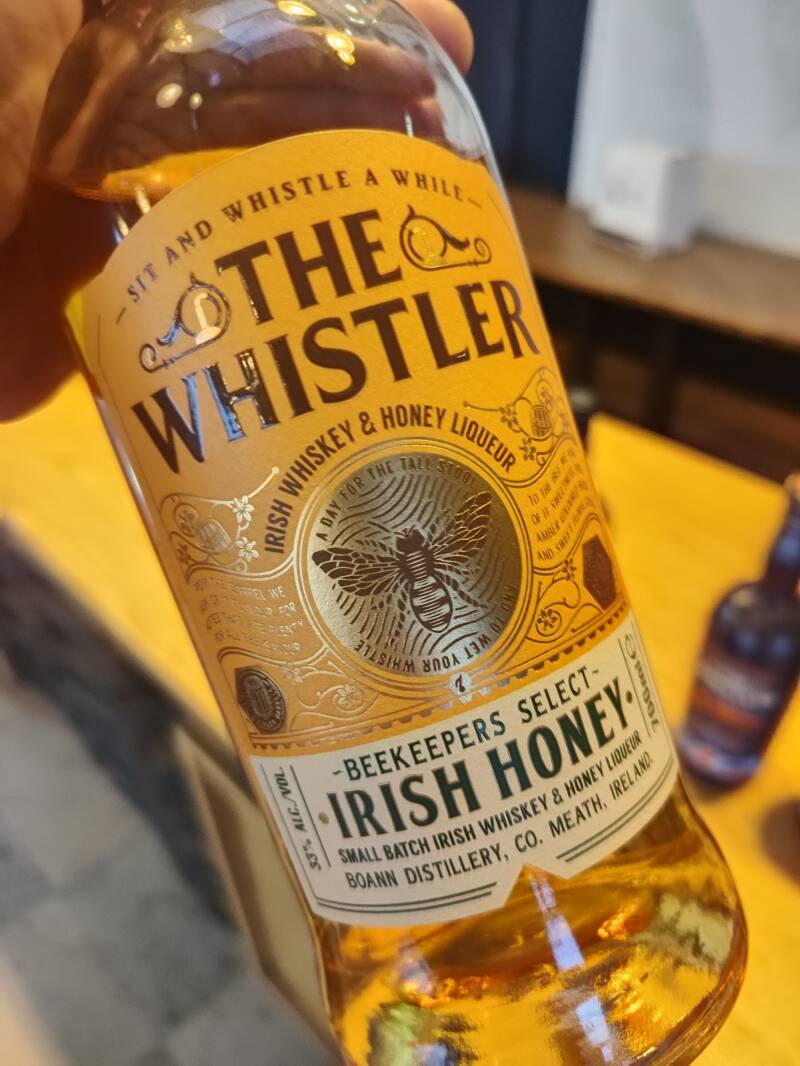
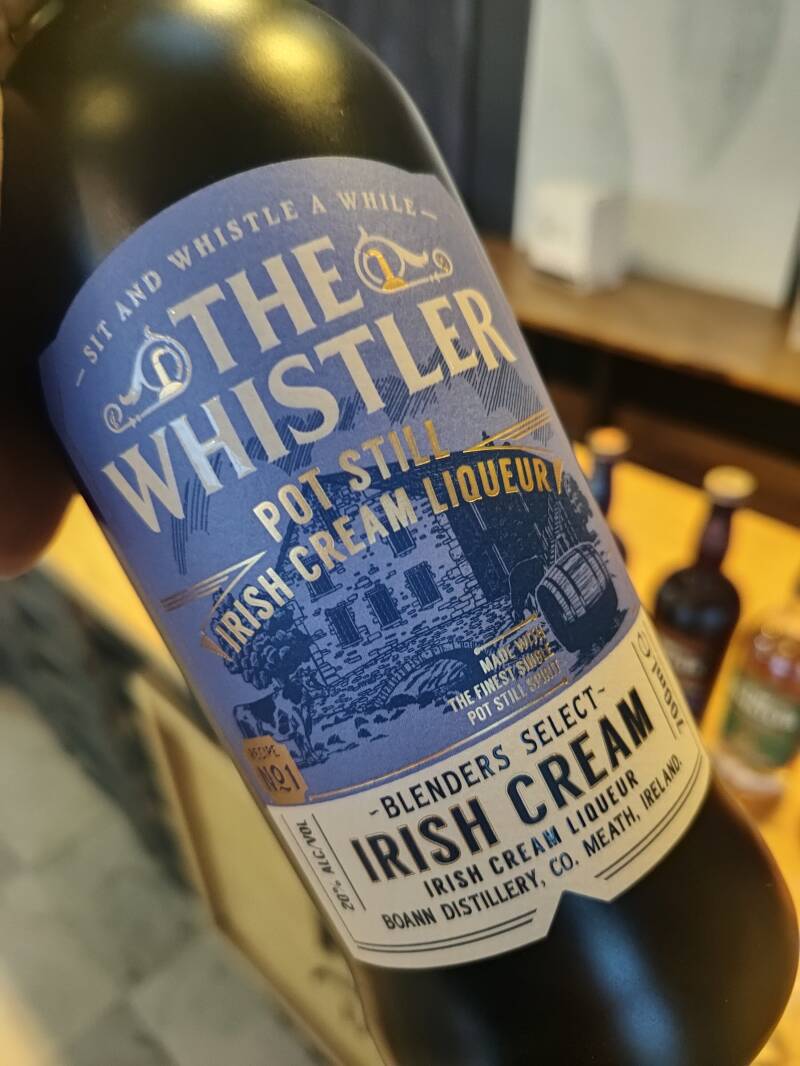
The apple brandy is actually apple-y, for once! Boann just ages this in ex-bourbon, releasing vintages in 2020 and 2022. The cream liqueur is good, but no surprises - just a solid execution of the type. The honey liqueur doesn’t showcase a distinctive flavour, despite having such a good source of honey. It works, don’t get me wrong, but I’d personally take the new Tullamore equivalent instead (though that uses less sustainable Bohemian honey…).
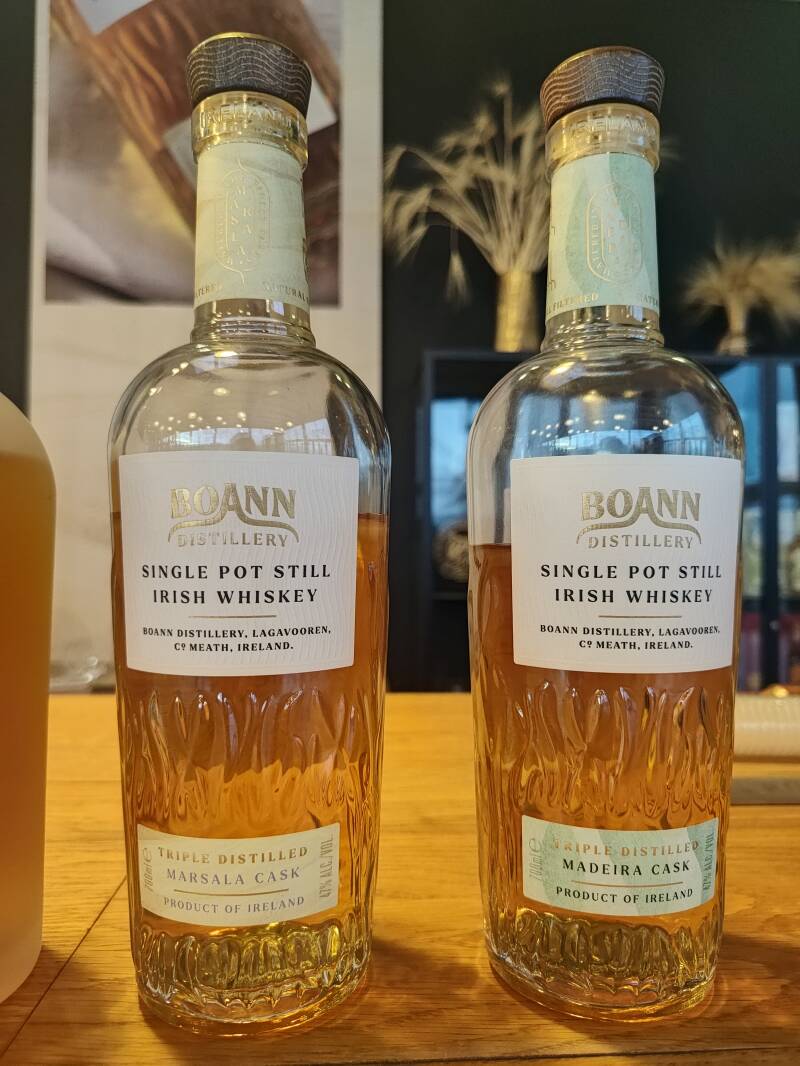
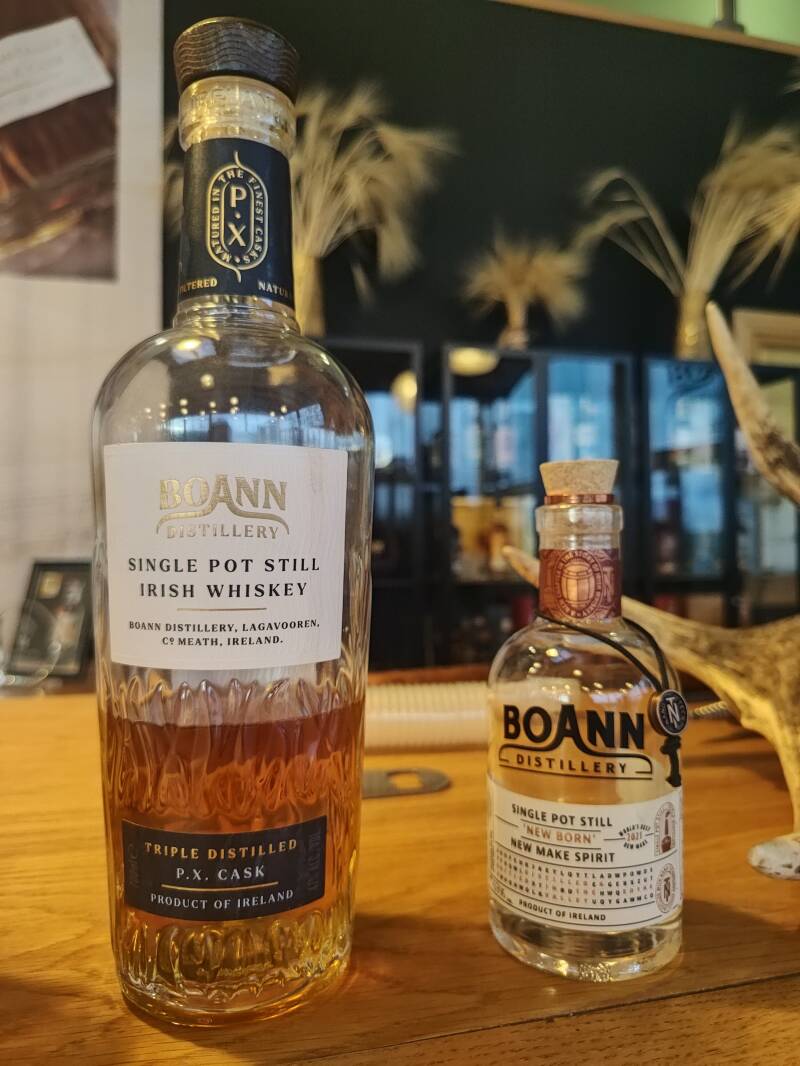
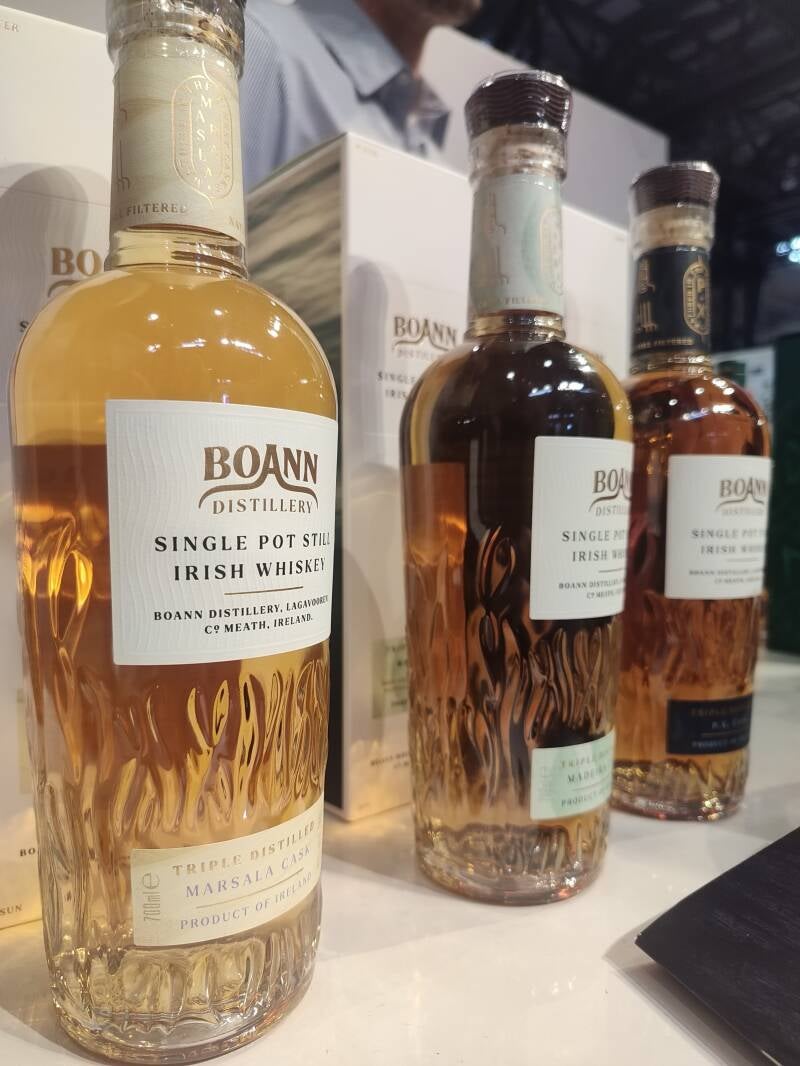
From the Whistler line to the full Boann SPS bottlings, the Marsala cask is light and slightly herbal, whereas the Madeira edition is sweeter. Alex explains to me how these Madeira casks were formerly cognac before being used for madeira, and I took a moment here to appreciate just how well he knew every corner of this process! Boann’s Madeira casks apparently come from Justinos, who produce around a third of all Madeira… The PX cask is a little toasty and herbal at first, staying warm. Not sure why I took fewer notes on this one, but there it is.
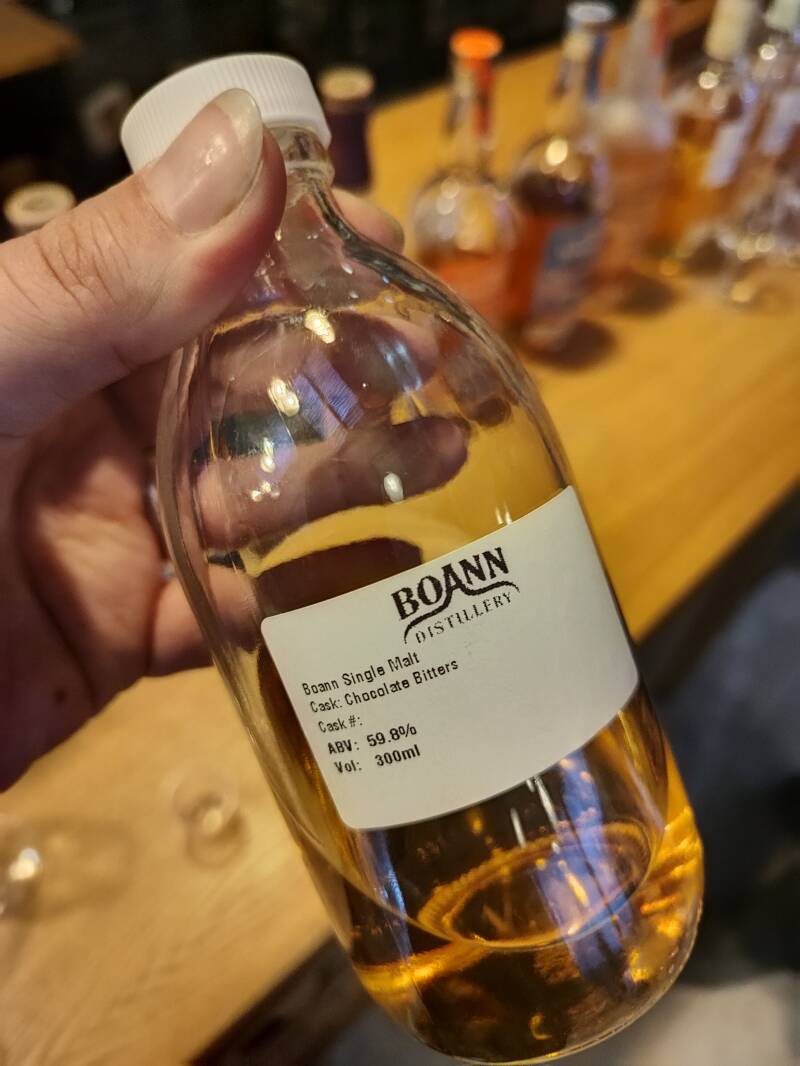
I also got to try an experimental sample of chocolate bitters… so biscuity! It reminded me of hot chocolate - I can see why this would be interesting in cocktails.
I need to thank everyone who made my visit possible: arranging, showing me around, talking me through the tasting. Funny enough, I’ve only been to a few Irish distilleries despite hailing from the island myself (Bushmills, Micil, Copeland), and none on such a personal, Eurowhisky basis - so it was wonderful to get this special welcome at Boann!
My overall impression is of a distillery which has made the right moves (at the right scale) to become firmly planted as one of Ireland’s whiskey mainstays. Their work on making SPS a more interesting category, getting new casks… it’s all going to add a lot to the quality of Irish whiskey. The only catch is that they are still so new that they don’t have many releases to show off - not well-aged ones, anyway. Once the main Boann range is older, other Irish distilleries will need to watch out…
Add comment
Comments