


With my fortunate lift over from In the Welsh Wind, I arrived at another nearby distillery: Dà Mhìle. For a long time, this was the only whiskey maker in Wales besides Penderyn, so I've always wanted to know more about it, especially as the name means '2000' in Gàidhlig , not Cymraeg …
I was shown around by owner John, who seemed to be in a bit of a rush at first but remained incredibly helpful throughout my visit. It turns out this isn't just a distillery, but a farm: Glynhynod Farm. In fact, it was bought by a couple who came over from Holland in the '80s! At that time, cheesemaking and brewing - the key agricultural practices around here for centuries, besides sheep-rearing - had been in decline for decades.
Having visited Wales and been influenced by John Seymour's 1976 Complete Book of Self-Sufficiency , John's parents started producing cheese here in 1982. They now represent Wales' longest established cheese artisans! John's father helped translate said book into Dutch. So my first surprise of the visit: this Welsh distillery is kind of Dutch?


It was this same person, John's father, who enjoyed whiskey and saw how an organic beer/wine movement was emerging in the early '80s. He saw that nobody was working on organic whiskey - in this respect, he was at least 20 years ahead of the curve. He visited Springbank and commissioned an organic batch of single malt from them back in 1992. It was supposed to be a one-off, matured in time for the Millenium, hence the Gaelic name 'Dà Mhìle'.
Funny enough, they got a taste for more! He went to Loch Lomond and got some organic grain whiskey from them. In the process, Dà Mhìle bottled the world's first organic blended whisky. Of course, this was all still Scotch whisky, not wisgi cymraeg…
Dà Mhìle is a small distillery, but by 2010, they were running out of stock. 'Why not start making it ourselves?' A pot still was installed here in 2011, just in time for the ginmaking craze to take off in Britain during the early 2010s. Dà Mhìle made four types of gin here, before their first single grain (2013) and single malt (2015) whiskies.
PRODUCTION
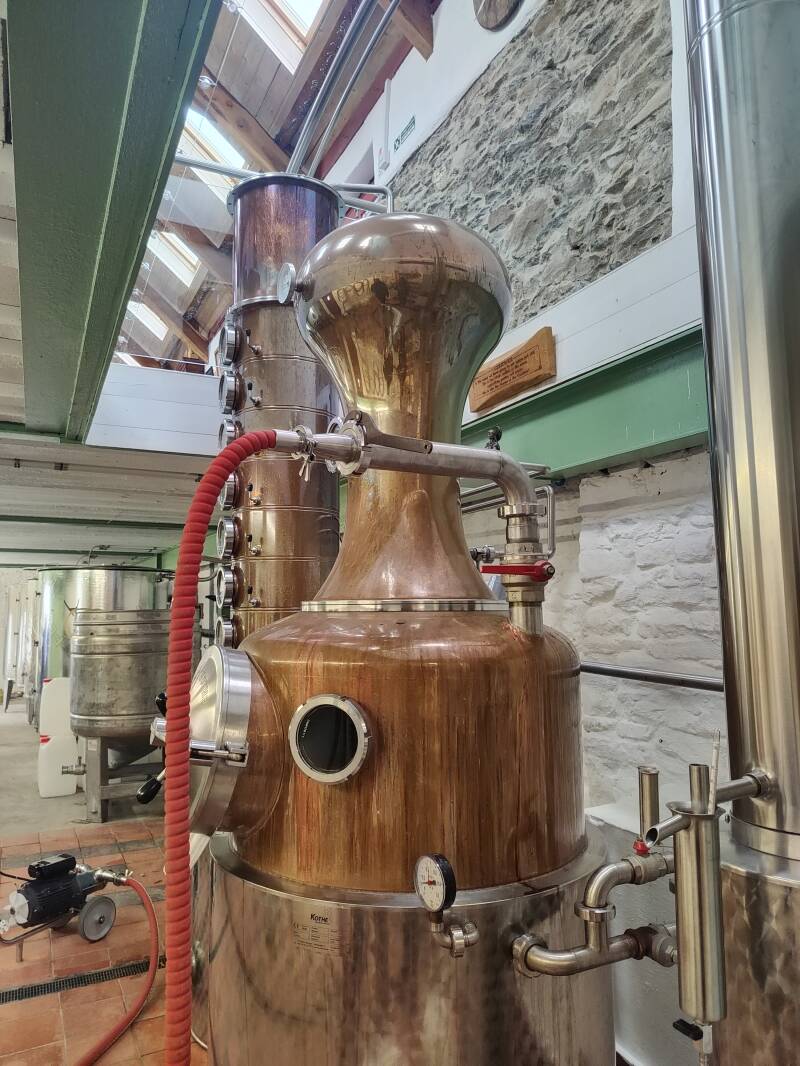
During my visit, the 1000L mash tun is out for refurbishment, but the steam-heated still is definitely in place! This 450L hybrid is named for the Welsh enchantress of legend Ceridwen , the name hanging above the still. Funny enough, the steam for this still is produced using a wood-fired boiler, taking advantage of fallen wood from around the farm and its woods.
Ceridwen has a seven plate column, but this is mostly reserved for gin. Only one plate is closed during whiskey runs, and Dà Mhìle practices double distillation for its single grain and single malt whiskeys alike.

The distillery building underwent a big renovation in 2011, but this revealed its true age in the process. Parts of this old farmhouse are four to five centuries old! There was a 16th century cobbled floor under this floor, but then they found another floor 80cm under that one. A lot of original stones and foundations are in place, more visible in the downstairs space used until recently as the farm's dairy. Reminds me of Kyro on a smaller scale !


Local green (aka unseasoned/dried) oak from the farm grounds has been used to furnish the upstairs part of the old farmhouse, where there is proof of families living as early as 1668! John is looking to expand the distillery with a terrace for visitors and better road access, taking better advantage of tourist traffic in the area.

Entering the maturation warehouse, I'm confronted with an apple aroma. Turns out that's no coincidence - John is making an apple brandy here, aging in Bordeaux casks! But back to the whisky. New spirit is currently piped underground to reach this space for maturation. Dà Mhìle single malt and single grain is aged here in separate cask types.


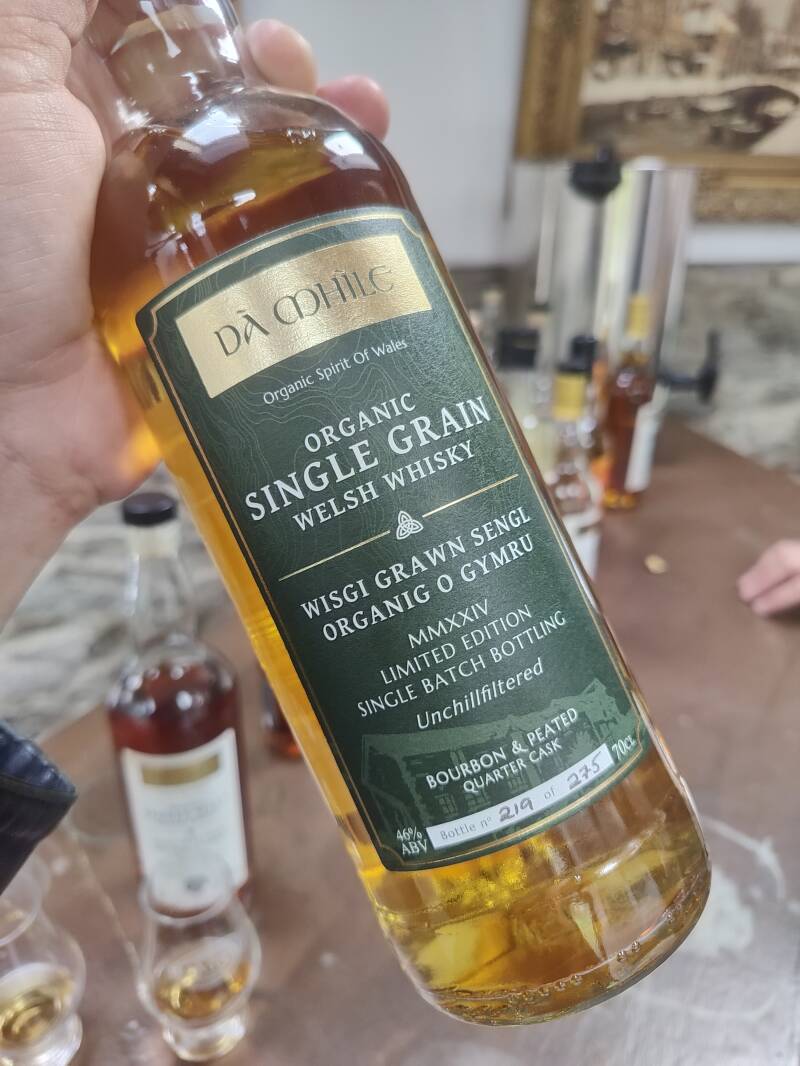
The Single Grain is made from barley, wheat, and rye. It combines three casks in each batch: one 1st fill bourbon, two Islay quarter casks. This means that Dà Mhìle's Single Grain is, unusually, their “peated” option!
Of course, it's a peated cask finish, not a smoked whiskey proper, but John notes that this is important for organic whisky. The Soil Association (quite rightly) doesn't want you to use peat in whiskey making, given the environmental damage caused by peat extraction. This is a way to still get smoke into a whiskey without breaking that rule, and the lower peat level has been popular.

That said, I would rather see some of that farmyard wood used for smoking. Take a little inspiration from Fary Lochan and others… On the cheese side of things, they plan to start their own wood-smoking from 2026. This was previously outsourced, but apparently the results were poor. It seems like Dà Mhìle will actually use this to leapfrog to some wood smoked malt in the near future, so watch this space!
Every single malt release from Dà Mhìle has been a hand-numbered, single cask bottling. John explains that the idea is to distinguish themselves from Penderyn with a more full, heavy, fruity kind of single malt. To further stand out from Penderyn (and compliment this distinct style of spirit), Dà Mhìle only matures their single malt in European fortified wine casks - and we're talking full maturation too, not finishes! In fact, the latest release, a muscat cask, was due to be released the day after my visit (to line up with the Welsh Whiskey Festival, which I was also visiting).


This warehouse sees very stable temperatures and thus a low angels share of maximum 2%. While it's not a Scottish dunnage, the building is also sunk down from the top of the valley, with one wall submerged in the Earth. This all moderates the rate of aging. John says that Dà Mhìle's whiskey is, in general, good to go after about six years.
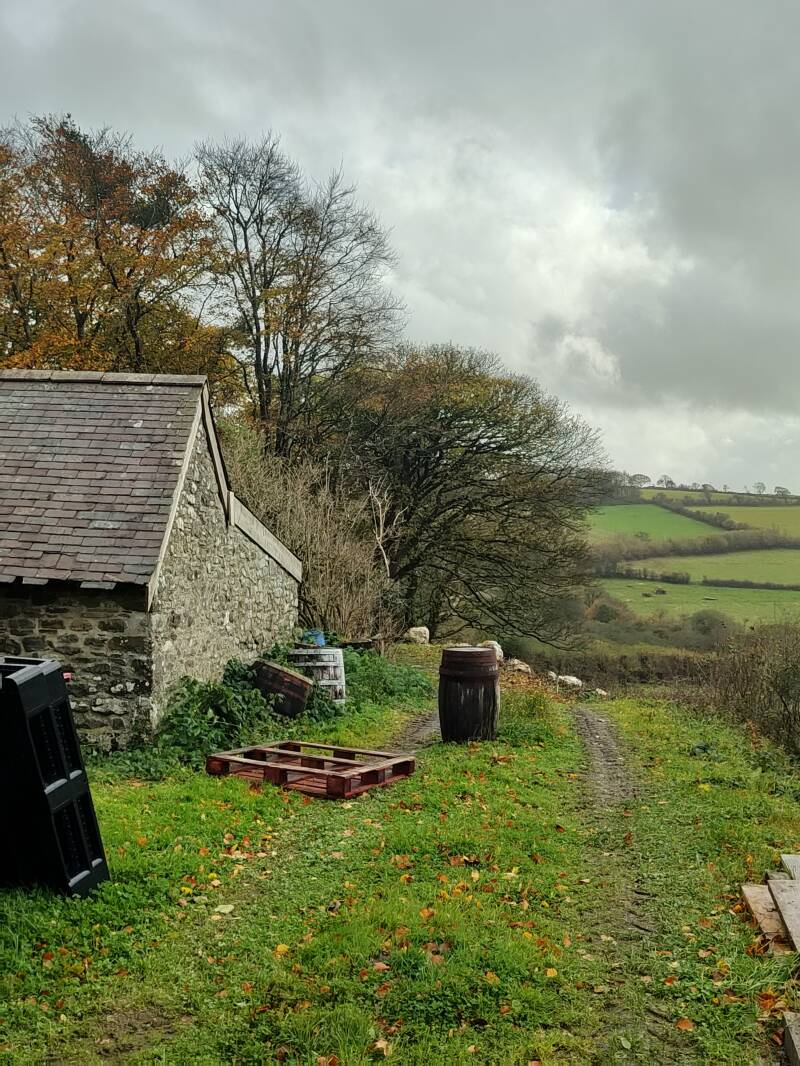
Dà Mhìle also has some ex-Appleton rum casks, and I can see a few Springbank casks, three of which represent the last of the original 15 hogsheads filled in 1992! Some rum is aging here too, 'Dark Skies' - a locally finished rum aged for a month with sugar, molasses, and old chipped whiskey barrels. They also make their own white rum here using organic molasses, some of which is currently six years old and ready for a 2026 release! Limoncello and absinthe are also hanging out in this warehouse!
TASTING
The first single malt I try is a sherry hogshead bottling released earlier in 2025, a 9 year old (their oldest yet). No Chill Filtration, 46% ABV, labeled with Roman numerals to reflect the original MM for Dà Mhìle (2000).

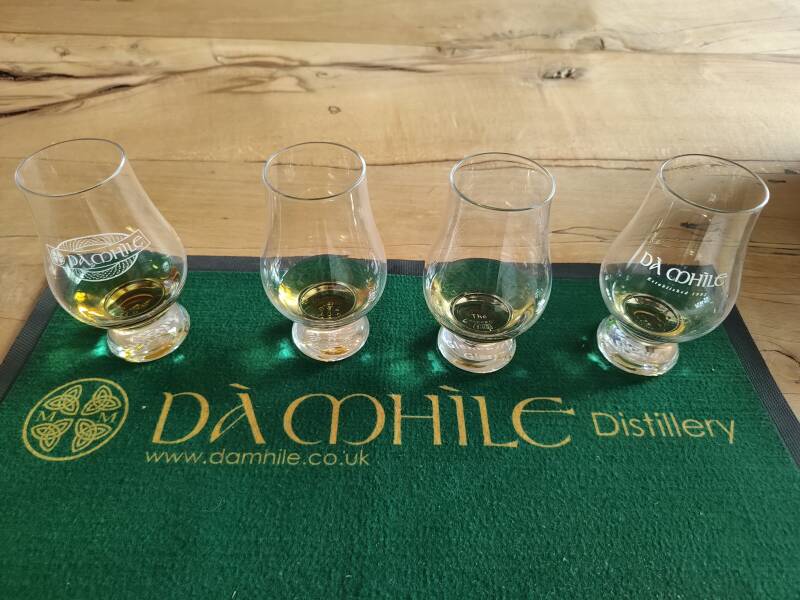
It has a heady sweetness for sure: Smooth at first, then with a little bite. A hint of tangy rosemary and herbal cedarwood before deep sherry notes come in. It's a chestwarming dram with only a slight spicy edge. It really has a vermouth-style edge to it (almost reminding me of German oak), avoiding the trap of being too sweet while showcasing the fantastic usefulness of this sherry cask.

Would they consider using local barley as part of their organic approach? John shakes his head: 'This part of Wales is just shocking for growing barley'. Their malt all comes from England at the moment, and they can source some very high quality stuff there. Again, it's not that Dà Mhìle isn't trying. John is exploring some heritage grain varieties currently being worked on at Aberystwyth University (similar to what IWW are already up to).
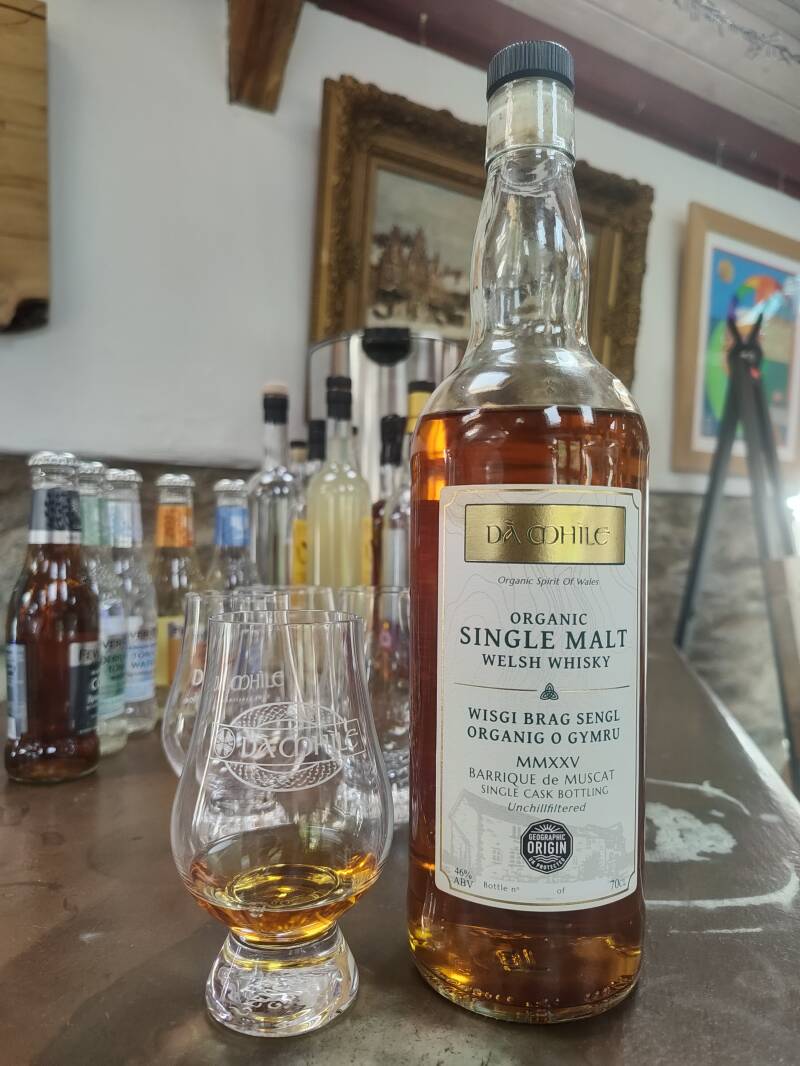
Next, a 46% ABV Muscat Cask Single Malt. That vermouth note is there again on the nose, and on the palate, but now accompanied by far more sweetness.
I then move on to one of their Single Grain batches, which are released every two years. Also bottled at 46% ABV, this dram is a lighter color. It's surprising how similar the mix of heady sweet and herbal vermouth notes are in this glass! That said, it is lighter in body, perhaps unsurprisingly. When it hits the palate, there's a balance of creaminess and salinity, but then the peat notes open up. There's just enough sweetness to balance the smoke and herbal notes. When I came back for a second nosing later, the first-fill bourbon and citrus notes were more evident.
I then got to be very lucky and taste some of the original twenty year old, 57% Loch Lomond grain! It evidently has a lot more classic Scotch whiskey DNA - very nice banana notes, but nowhere near as interesting as the regular Dà Mhìle single grain!

I also got a quick look round the cheesemaking operations - heck, maybe you're more interested in this side of things anyway! Some legacy of Dutch cheesemaking is evident here, with some Delft tiles and old Dutch vats. Their cheese presses are a mix of English and Dutch, all over 100 years old.

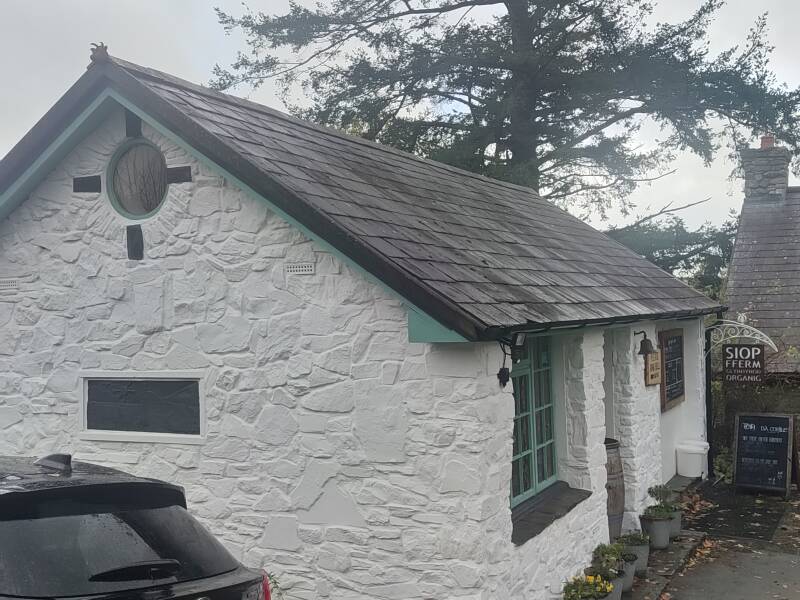
This is the shop for Caws Teifi , the farm's cheese brand
The farm's own milk is brought here fresh in the morning (never in the evening, or from other farms), taking only 30 minutes to get from the cow to the vats. No need for refrigeration, and apparently it also avoids messing with the proteins in the milk.
They use both animal and vegetable rennet, with a Gouda style cheese being their core product. Alongside that, they do Dutch young, old, and mature styles, halloumi, some smoked options, and a Caerphilly. They're one of the few UK GI producers who make real Caerphilly cheese.
Thanks for the tour, John! With these two visits to In the Welsh Wind and Dà Mhìle, I got a truly in-depth look at this budding whiskey world in Ceredigion which is slowly adding to the area's gastronomic credentials. If you're a fan of whisky, cheese, or both (who ever heard of such a thing?), I recommend you go and take a look! I'm always going on about how beautiful Wales is, and Welsh culture is just as enjoyable.

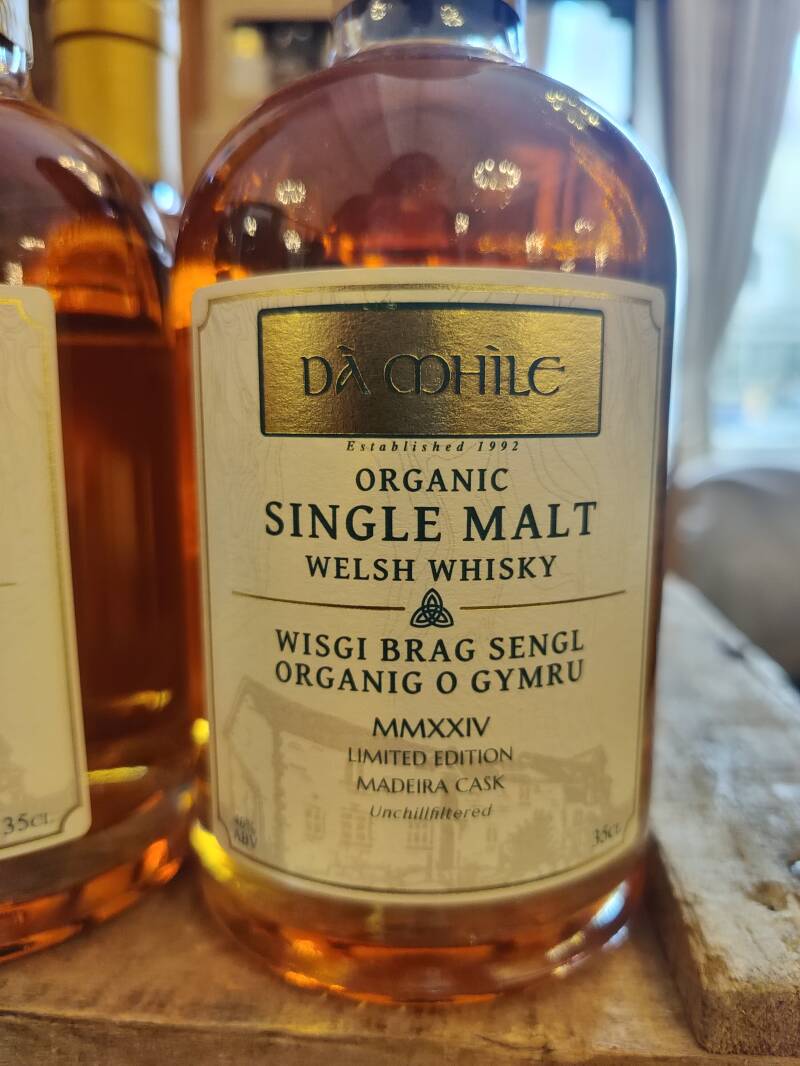
Bonus - Dà Mhìle at the Welsh Whiskey Festival! I went the next day, saw John again and got myself a little 5cl Madeira cask bottle.

Add comment
Comments